

ADDRESSES OF THE PRESIDENT AND THEIR ROLE IN THE DEVELOPMENT OF CRIMINAL LEGISLATION
Pursuant to Part Three of Article 1 of the Constitution of the Republic of Tajikistan, the form of government in the Republic of Tajikistan is declared to be presidential, and Chapter Four of the Constitution defines and specifies the legal status of the President of the Republic of Tajikistan.
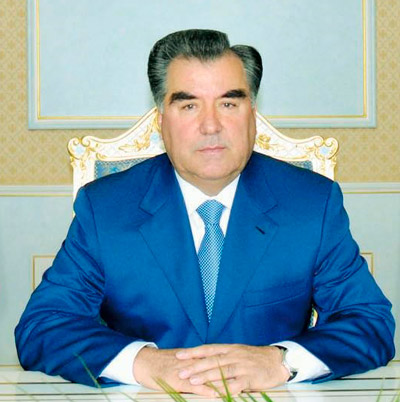
It is worth noting that the institution of the Address of the President of the Republic of Tajikistan “On the Main Directions of the Internal and Foreign Policy of the Republic” emerged as a result of constitutional amendments and additions adopted through a national referendum held on September 26, 1999, particularly to Articles 55 and 69. For the first time, the President of the Republic of Tajikistan, H.E. Emomali Rahmon, delivered such an address on April 27, 2000, during a joint session of the Majlisi Milli and the Majlisi Namoyandagon of the Majlisi Oli of the Republic of Tajikistan.
It must be emphasized that the place and role Addresses of the President of the Republic of Tajikistan “On the Main Directions of the Internal and Foreign Policy of the Republic” in the development of the legal framework of the Republic of Tajikistan, especially in the field of criminal legislation, are substantial.
On this matter, Professor Nasriddinzoda E.S. rightly noted: “The legislative system of the Republic of Tajikistan has evolved due to various causes and factors, and one of the most important tools for its improvement is precisely the Addresses of the President of the Republic of Tajikistan. This strategically important document facilitates the reform of the legislative system through adopting new normative legal acts, amending existing codes and laws, improving law-making activities, strengthening the work of law enforcement agencies, enhancing the quality and implementation of laws in the socio-economic and political-legal spheres, and aligning them with national and international standards.”
In his Address of April 30, 2004, President of the Republic of Tajikistan, H.E. Emomali Rahmon, speaking on the supreme value of human rights and freedoms, proposed a moratorium on the application of the death penalty in the Republic of Tajikistan, stating: “Limiting the application of the death penalty is a very important measure; however, human life should be treated humanely. The individual, their rights and freedoms are of the highest value and inviolable, and the right to life occupies a special place among them. Indeed, the right to life is a natural value, and no one has the right to deprive another of this right.
In view of the above, a moratorium on the application of the death penalty is declared in the Republic of Tajikistan. A working group is to be created to draft the necessary legal acts in the shortest possible time.”
To implement the tasks outlined in this Address, a draft Law of the Republic of Tajikistan “On the Suspension of the Application of the Death Penalty” was prepared. On May 7, 2004, President of the Republic of Tajikistan, H.E. Emomali Rahmon, exercising his right of legislative initiative, submitted the draft law to the Majlisi Namoyandagon of the Majlisi Oli.
This draft law aimed to protect and guarantee human rights and freedoms and to bring the provisions of the Criminal Code of Tajikistan in line with humanitarian principles.
Thus, the Law of the Republic of Tajikistan “On the Suspension of the Application of the Death Penalty” was adopted and approved by the country’s parliament and signed by the President on July 15, 2004. According to Article 1 of this Law, the death penalty was suspended for crimes under Articles 104 Part 2, 138 Part 3, 179 Part 3, 398, and 399 of the Criminal Code, as well as the execution and related provisions in Articles 19, 21, 23, 25, 78, 100, 127, 129, 131, 133, and 214–222 of the Penal Enforcement Code of Tajikistan. During the moratorium period, a punishment of 25 years of imprisonment was introduced instead.
Furthermore, relevant amendments were made to the Criminal Code of the Republic of Tajikistan dated July 15, 2004, particularly in Part 2 Article 58, sanctions of Part 2 Article 104, Part 3 Article 138, Part 3 Article 179, sanctions of Articles 398 and 399, replacing the word “twenty” with “twenty-five.”
In the Address of the President of April 26, 2013, the need to prepare a new version of the Criminal Code was highlighted. The Head of State stated: “In order to align the regulation of key social relations with modern requirements, the Government of Tajikistan must prepare and submit new versions of the Civil and Criminal Codes.”
Accordingly, the draft of the new version of the Criminal Code was prepared and is currently under review by the Government of the Republic, though it has not yet been submitted to the Majlisi Namoyandagon of the Majlisi Oli.
In the Address of January 20, 2016, the President of the country expressed concern over the threats of terrorism and extremism, stating: “Within expansion of counteraction to terrorism and extremism, we need to expand and specify the entities fighting against these phenomena and alongside with this to strengthen liability and punishment for commitment of crimes against the constitutional order and State Security, terrorism and extremism related crimes, betrayal, complicity in such crimes, including against organizers and promoters.”
In this regard, the General Prosecutor’s Office, Ministries of Justice and Internal Affairs, the State Committee for National Security, and the National Legislation Center were instructed to comprehensively analyze the Criminal Code and other related laws and submit concrete proposals for necessary amendments and additions. They were also tasked with drafting and presenting the National Strategy on Countering Extremism and Terrorism for 2016–2020.
As a result, the criminal legislation of the Republic of Tajikistan, particularly the Criminal Code, has been improved. To prevent and reduce crime, toughen criminal liability for crimes against the constitutional foundations and state security, and strengthen the mechanisms of national security and prevent citizens from joining illegal parties and movements, several amendments were introduced to Articles 179, 179(3), 305, 306, 307, 307(1), 307(2), 307(3) and 307(4), among others.
Additionally, by the Decree of the President of the Republic of Tajikistan dated November 12, 2016, No. 776, the National Strategy of the Republic of Tajikistan on Countering Extremism and Terrorism for 2016–2020. This strategic document defined the goals, objectives, and main directions of state policy in this area.
In his Address to the Majlisi Oli on December 23, 2022, President of the country emphasized the need to create a Unified Information Center to prevent extremist, terrorist, and cyber-related crimes. As a result, by the decree of the President of the Republic of Tajikistan dated April 19, 2023, a new structure—the Unified Information Center for Preventing Extremism, Terrorism, and Cybercrime—was established under the central apparatus of the General Prosecutor’s Office. Most staff members of the center possess specialized technical expertise, contributing to enhanced prevention and combat of these threats.
It is worth emphasizing that numerous normative legal acts and strategic planning documents have been adopted and amended to implement the Addresses of the President of the Republic of Tajikistan “On the Main Directions of Internal and Foreign Policy of the Republic” aimed at addressing and countering terrorism, extremism, corruption, and other threats. These include the Laws of the Republic of Tajikistan “On Countering Extremism” (January 2, 2020), “On Countering Corruption” (August 7, 2020), “On Countering Terrorism” (December 23, 2021), and the National Strategy for Countering Extremism and Terrorism for 2021–2025 (approved by the decree of the President of the Republic of Tajikistan dated June 1, 2021), among others.
Thus, based on the Addresses of the President of the Republic of Tajikistan “on the Main Directions of the Internal and Foreign Policy of the Republic”, the criminal legislation of Tajikistan has been reformed in the spheres of combating terrorism, extremism, corruption, and other crimes—aimed at protecting human and civil rights and freedoms, ensuring state and public security, safeguarding national independence, reinforcing legality, and ensuring lasting peace and stability in the country, as well as crime prevention.
Firuz Sainozimzoda
Head of the Department for State Protection of Civil and Political Rights
Office of the Commissioner for Human Rights in the Republic of Tajikistan,
Candidate of Legal Sciences